Ask five people what procurement solutions means and you are probably get five different answers. Some picture a consultant negotiating supplier contracts. Others picture a team physically tracking down manufacturers, checking their work, and getting components shipped on time. The confusion usually comes from treating procurement as one single thing, when it actually changes a lot depending on what’s being sourced.
This guide answers the question directly:
What is procurement solutions, why businesses rely on them, and what separates a genuinely useful procurement solutions provider from one that just moves paperwork around. We are also look specifically at what procurement solutions means for electronic components, one of the trickiest categories to source well.
What Are Procurement Solutions for Industrial Buyers?
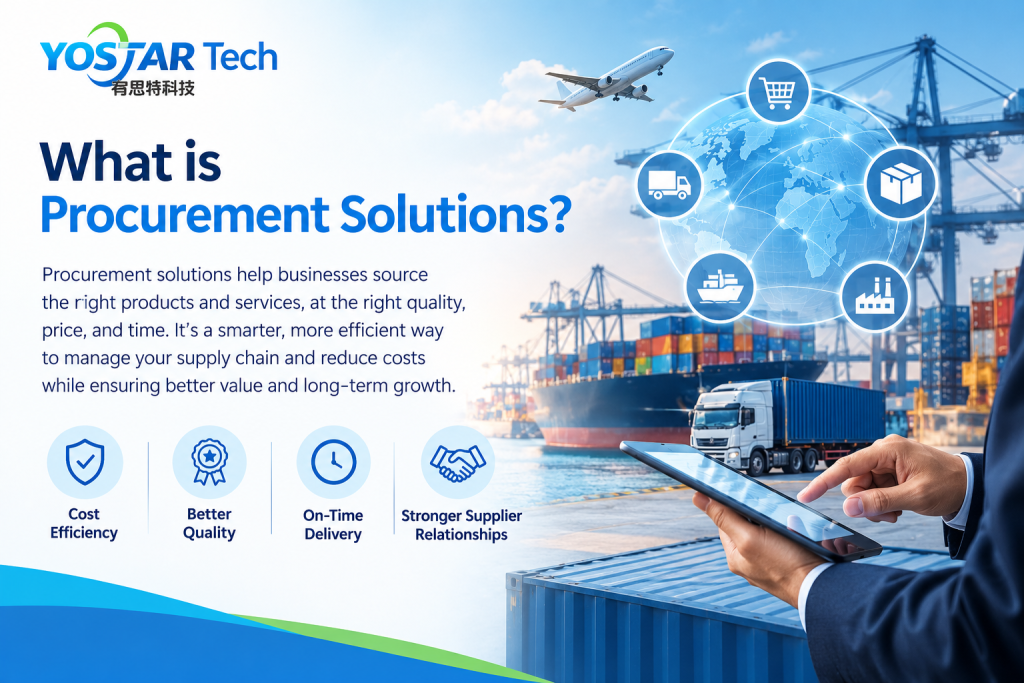
In essence, procurement solutions encompass any services or processes that help a business evaluate, purchase, and manage the goods or services it needs to run its business. For an industrial buyer, that almost always means physical products, power modules, energy storage cells, precision machined parts, electronic components, production supplies, and similar categories that can’t just be picked off a shelf.
The main goal is to minimize risk and reduce costs while ensuring the right part is delivered at the right time by a supplier that is reliable. This is the goal in every section of this article.
It’s Sourcing Work, Not a Dashboard
A lot of people assume procurement solutions means some kind of ordering system that tracks purchases automatically. That’s a fair assumption for office supplies or subscription renewals, but it falls apart the moment you are dealing with engineered, physical products. There’s no software that can determine whether a factory tooling can precisely manufacture a part to specification.
Additionally, no system can tell whether a shipment of components will meet end-of-line inspection criteria. These things can only be determined by people. People review blueprints, inspect finished components, and arrange shipments across international borders. Furthermore, people perform supplier audits to evaluate whether components can be acquired at fair prices.
This is the model behind companies like Yostar Tech, which has spent years expanding its sourcing capability across power modules, energy storage cells, precision machined parts, electronic components, and production supplies. It’s hands-on sourcing and supplier management, not an ordering platform, and not something that runs itself in the background.
Why Industrial Procurement Solutions are a Different
Industrial procurement solutions deserve their own conversation, because the stakes and complexity are usually higher than a typical office purchase.
Consider what’s involved in sourcing something like a custom power module, a batch of precision-machined parts, or specialized electronic components:
- The specification often needs engineering review before any factory can quote it accurately.
- Diferent countries may contain the suppliers you work with. different countries may have different business standards and ways of communication.
- Lead times stretch to weeks or months, and a single delay can stall an entire production schedule.
- Physical inspection is non-negotiable. A part that “looks right” on a spec sheet still needs to be checked in hand.
None of this is solved by an automated order form. It requires people who understand both the technical side of the product and the practical realities of moving goods across borders.
What is Procurement Solutions in Electronic Components?
Electronic components are one of the harder categories to source well, and it’s worth walking through why. A single project might need capacitors, connectors, chips, or switch protection devices from several different manufacturers, and a shortage or defect in even one part can hold up an entire production run.
In this category, a procurement solution generally covers three things: finding manufacturers who can actually supply the exact component specified (not a “close enough” substitute), verifying authenticity and quality before the parts ship, and managing lead times so a shortage on one component doesn’t stall a client’s entire build.
Counterfeit and mismatched electronic components are a real risk in global sourcing, which is why inspection and supplier verification matter more here than in almost any other category. A trustworthy procurement solutions provider treats this as core to the job, not an optional extra.
What Makes a Procurement Solutions Provider Actually Useful
Not every provider adds the same value. A useful procurement solutions provider generally handles four connected responsibilities:
- Resource Development — maintaining a vetted network of suppliers instead of starting the search from zero every time a new component is needed.
- Sourcing and Negotiation — matching a client’s exact requirements to the right manufacturer, then negotiating terms that protect the buyer.
- Quality Control — inspecting goods before they ship, not after they’ve already caused a production delay.
- Project and Delivery Management — owning the process from initial spec through final delivery, including support if something needs replacing later.
When these four functions work together under one roof, you get what’s usually called integrated procurement solutions, a single accountable process instead of five disconnected vendor relationships that a buyer has to manage alone. A business juggling separate contacts for sourcing, quality inspection, and logistics is absorbing risk at every handoff. An integrated model puts one team, and one point of accountability, in charge of the whole chain.
A Practical Example
Picture a telecom infrastructure company that needs a batch of power modules built to a specific voltage and thermal tolerance, not something available off the shelf. Simply placing an order and tracking the invoice tells you nothing about whether the factory quoting the job can actually meet the tolerance, or whether the batch will pass inspection before it ships.
This is exactly the gap that industrial procurement solutions are built to close. Instead of just processing a transaction, the provider identifies manufacturers with the right capability, reviews technical drawings against what the factory can realistically produce, inspects the goods before they leave the production floor, and manages the shipping timeline so the client’s project doesn’t stall waiting on a part.
FAQs
What is procurement solutions tell me in one sentence?
It’s the process and people responsible for finding, vetting, and delivering the goods a business needs, for industrial buyers, this usually means physical components rather than office purchases.
Do small businesses need a procurement solutions provider?
If purchases are simple and local, probably not. If you’re sourcing custom or overseas components even occasionally, a provider with an existing supplier network can prevent costly mistakes that are hard to catch on your own.
What the difference between a supplier and a procurement solutions provider?
A supplier sells you their own product. A procurement solutions provider works across a network of manufacturers, matching requirements to the right one, and can switch suppliers mid-project if quality standards aren’t met, something a single supplier relationship can’t offer.
Conclusion
Procurement solutions are not just one product; they are also not a single event. The main job of a buyer in industry is to find suppliers (manufacturers), verify that the supplier can produce to your specifications, inspect the product prior to shipment, and then manage the logistics of getting the product delivered to you so that your projects do not stall because you are missing a part. This is exactly why integrated procurement solutions exist.
For companies sourcing industrial components, power modules, energy storage cells, precision machined parts, electronic components, or production supplies, from overseas manufacturers, the answer isn’t a system that runs on its own. It’s a genuine procurement solutions provider handling sourcing, customization, quality control, and delivery as one connected process.
That is the role Yostar Tech plays for its clients: a global industrial sourcing and supply-chain partner that helps businesses find the right manufacturer, customize products to exact specifications, verify quality before shipment, and manage delivery from factory floor to final destination.
If your next project needs more than a purchase order, if it needs someone managing the whole chain, reach out to Yostar Tech to talk through your sourcing and procurement requirements.